Dog Blog Search

Photobucket
Welcome to Annabel's Canine Blog, where the place goes to the dogs!!

December Picture of the Month!

December Picture of the Month!
"'Twas the night before Christmas.."

Translate

The Paw Message Board (updated occasionally)

• New Picture of the Month

Send me pics and info about your dog at: annabelsdogblog@gmail.com
It could be the next featured pooch!


Wednesday, October 28, 2009

Norwegians!


Norwegian Elkhounds are so cool so why don't you have a look at some facts about them!

#1. "The Norwegian Elkhound is a sturdy, medium-sized Spitz-type dog."
#2. "The body is short and squarely built."
#3. "The back is straight and strong."
#4. "The wedge shaped head is broad at the ears."
#5. "The teeth should meet in a scissors bite."
#6. "The medium sized, oval shaped eyes are dark brown."
#7. "The ears are set high on the head, firm but very mobile."
#8. "The chest is deep and relatively wide."
#9. "The legs appear straight from the front."
#10. "The oval paws are small and tight with thick pads."
#11. "The tail is set high tightly curled over the back."
#12. "The weather-resistant, double coat is thick and hard. The coat is gray with black tips and a lighter undercoat and undersides with a black muzzle, ears, and tip of the tail. Norwegian Elkhound puppies are born black and turn gray when they are about a week old as their coat develops."
#13. "The Norwegian Elkhound is alert, bold, loyal and friendly."
#14. "Although some may be somewhat reserved with strangers, it will greet family and friends it knows with enthusiasm."
#15. "Docile, trustworthy and energetic, they are good child companions."
#16. "Like other Arctic dogs, the Norwegian Elkhound has a mind of its own and is fairly independent, however they are affectionate with their family."
#17. "They have an outstanding character, and are relatively clean compared to some other breeds."
#18. "Can be somewhat difficult to obedience train."
#19. "It is important to be firm with this dog, showing good pack leadership."
#20. "They need firm, but gentle discipline."
#21. "A natural watch and guard dog."
#22. "This breed likes to roam and bark."
#23. "They were bred to be hunters who hold their prey at bay, barking at it constantly until the hunter arrives."
#24. "If their barking becomes obsessive they must be taught enough is enough after they alert you once, it's time to quiet down."
#25. "Be fair when training this breed, and understand it is a canine, not a human and treat the dog accordingly."
#26. "If they are not 100% sure of their follower place in the world they can develop a tendency to fight with other dogs."
#27. "Elkhounds are hunters and should not be trusted alone with small non-canine pets such as hamsters, pet rats, mice or guinea pigs, however some have been known to get along with them when the owners worked at communicating to the dog that the small pet was alpha over them. They can get along with cats of the family."
#28. "Without enough mental and or physical exercise they can become high strung."
#29. "Be sure to make the dog heel when on a walk beside or behind you, never in front, to reinforce the human is alpha over the dog, pack leader goes first."
#30. "Height: Dogs 19-21 inches (48-53 cm.)
Bitches 18-20 inches (46-51 cm.)"
#31. "Weight: Dogs 50-60 pounds (23-27 kg.)
Bitches 40-55 pounds (18-25 kg.)"
#32. "Prone to hip dysplasia, pyotraumatic dermatitis and PRA. Occasionally seen is Fanconi syndrome. Gains weight easily, do not over feed."
#33. "The Norwegian Elkhound will be okay in an apartment if it is sufficiently exercised. It is fairly active indoors and does best with at least a large yard. Elkhounds prefer cool climates."
#34. "The Norwegian Elkhound is a very energetic dog that thrives on strenuous activity. They need to be taken on a daily, long, brisk walk or jog. While out on the walk the dog must be made to heel beside or behind the person holding the lead, as in a dog's mind the leader leads the way, and that leader needs to be the human. It should have at least an hour of exercise a day. It will enjoy a running beside your bike or a really good run in the woods, but remember that these dogs like to roam. If they pick up an interesting scent, they may ignore you, or not even hear you when you call them."
#35. "Life Expectancy: About 12-15 years."
#36. "The hard, coarse, weatherproof coat is easy to groom. It should be brushed regularly, with extra care given while the dog is shedding its dense undercoat. When the dog is shedding, the dead hair clings to the new hair. The dead hair should be removed with a rubber brush or a wooden comb with a double row of metal teeth. Brushes and combs just for this purpose are sold in pet stores. Bathe only when necessary, as it removes the natural oils in the skin. Like other Arctic dogs, they do not have the usual smell of dog hair. The coat is both water and dirt resistant. This breed is a seasonally heavy shedder."
#37. "The Norwegian Elkhound originated in Scandinavia and is one of the most ancient breeds, it is thousands of years old and has been around since the stone age. A skeleton similar to today's Norwegian Elkhound dating from 4000 to 5000 BC has been found. To put some perspective on it, these dogs have been around since man hunted with slingshots and lived in caves. They worked as a hunting and guard dog for the Vikings. The dogs were used as big and small game hunters tracking animals such as moose, elk, bear, mountain lion, badger, lynx, wolf, reindeer and rabbit. The dogs would track the quarry and alert the hunter by barking, holding the animal at bay until the hunter arrived. Norwegian Elkhounds can smell game from over a mile away. The dogs tended to work better at night then in the daytime. The breed is also highly prized as a sled dog. In case of war, the Norwegian Defense Minister has the power to mobilize all privately owned Elkhounds. In more recent times, the friendly and reliable character of the Elkhound has helped win a place in many homes as a cherished family pet. The name "Elkhound," is a direct translation from its original Norwegian name "Elghund," meaning "moose dog". In Norwegian, "elg" means "moose", and "hund" means "dog". The breed was first exhibited in 1877 when the Norwegian Hunters Association began holding shows. The AKC first recognized the breed in 1913. In 1923, the Elkhound Club was formed and the breed was officially recognized by the British Kennel Club. Some of the Elkhound's talents include: hunting, tracking, herding, watchdog, guarding, sledding, and agility. There is also a Black Norwegian Elkhound that is recognized as a separate breed, but is almost identical in type accept for color."

Info from: http://www.dogbreedinfo.com/norwegianelkhound.htm
Pic of Norwegian Elkhound adult from: http://media-2.web.britannica.com/eb-media/14/8114-004-5889CB85.jpg
Pic of puppy from: http://www.dogbreedinfo.com/norwegianelkhound.htm

Sunday, October 25, 2009

Bouviers!

Bouvier des Flandres are so cute so why don't you have a look at some facts about them!

#1. "Pronunciation: BOOV-yay day FLAHN-druh."
#2. "The Bouvier is a large, powerful, rugged looking dog."
#3. "The head is in proportion to the body, giving the dog a square profile."
#4. "The broad, somewhat short back has a firm level top-line."
#5. "The head is flat, slightly longer than it is wide."
#6. "The nose is black."
#7. "The bushy eyebrows make the stop more pronounced than it really is."
#8. "The teeth meet in a scissors bite."
#9. "The dark brown eyes are oval in shape with black eye rims."
#10. "The triangular ears are set high either cropped or left natural."
#11. "The well muscled back legs are powerful and the front legs are straight."
#12. "The tail is set high and usually docked."
#13. "The double coat is weather-resistant with rough, harsh outer hairs. The undercoat is fine and soft but dense. The coat is cut so it has a shaggy, thick beard and eyebrows giving the dog a distinctive look. Coat colors come in black, fawn, blonde, salt and pepper, gray, or brindle. Sometimes with a small white star on the chest. Solid black coats are not favored in the show ring, but are accepted and blonde coats are not accepted."
#14. "Dutch bloodlines are often larger and heavier than Belgians lines."
#15. "The Bouvier des Flandres is an obedient dog, whom may look intimidating, but is actually pleasant natured and gentle."
#16. "With the proper amount of exercise they will also be calm."
#17. "Enthusiastic, responsible, even tempered and fearless."
#18. "An excellent guard and watchdog that is easy to train."
#19. "This breed learns commands relatively fast, though not quite as fast as, for example the German Shepherd."
#20. "They require well-balanced training which remains consistent in nature."
#21. "Once they learn a command they will remember it for the rest of their life."
#22. "It is important to consistently make the dog aware, without being harsh or rough, that you are and will remain the boss."
#23. "This breed needs an experienced owner to prevent dominance and over-protectiveness problems."
#24. "It should be socialized well preferably starting at an early age to avoid shyness, suspiciousness, and reserved with strangers."
#25. "Protection of the family when danger is present is not something that needs to be taught, nor is it something you can train out of them."
#26. "The dog will arise to the occasion if needed."
#27. "A good family dog, the Bouvier likes and is excellent with children."
#28. "The Bouvier is very adaptable and goes about its business quietly and calmly."
#29. "This dog's loyalty is world famous."
#30. "Obedience train this breed at an early age."
#31. "Their behavior in general and with other animals depends on the owners ability to be alpha over the dog communicating what is expected and the individual dominancy level of the dog."
#32. "Provided they are properly socialized at an early age, chances are they will get along well with cats and other pets, but take caution with non-canine pets. They are usually good with other dogs if they are raised with them from puppyhood. More dominant individuals can be dog-aggressive if the owners are not alpha and do not communicate to the dog that fighting is unwanted."
#33. "Slow to mature in both mind and body, taking about 2-3 years."
#34. "Height: Dogs 23-28 inches (58-71 cm.)
Bitches 22-27 inches (56-69 cm.)"
#35. "Weight: Dogs 75-90 pounds (34-41 kg.)
Bitches 60-80 pounds (27-36 kg.)"
#36. "Prone to hip dysplasia, eye problems such as cataracts. The Bouvier has a very high pain threshold. They can take a lot of contact with the cattle's legs without feeling it. This does not make them a veterinarian's favorite patient, as they cannot tell where the dog is hurting by manipulating the legs and/or other body parts."
#37. "The Bouvier des Flandres will do okay in an apartment if it is sufficiently exercised. It is relatively inactive indoors and will do best with at least a large yard."
#38. "The Bouvier des Flandres is an energetic and active dog that has an average demand for exercise. It needs to go out with you for long, brisk daily walks or running alongside a bike. When walking this dog make him heel on the lead. Do not allow him to walk out in front as instinct tells a dog pack leader goes first. During the growing stage, exercise should be carefully regulated to only the walk, so that growing bones, muscles and joints are not too strenuously stressed. The dog requires all its energy to build a strong, healthy frame."
#39. "Life Expectancy: About 10-12 years."
#40. "Litter Size: 5 - 10 puppies - Average 8."
#41. "Needs a lot of grooming. Brush the long coat regularly and bathe or dry shampoo only when necessary. The Bouvier needs to be trimmed at least three times a year. Between trims remove any excess hair inside the ears and trim hair between the pads of the feet. Do not let the hair grow too long close to the feet but trim it so that the Bouvier has nice round feet. A well-groomed Bouvier sheds very little hair in the home. Some Bouvier owners have reported the Bouvier to be good for allergy sufferers."
#42. "There is no real agreement concerning the origin of this Franco-Belgian breed. It may have been formed by crossing the Griffon and the Beauceron. The breed originated in Belgium by the working class who were not interested in creating a show dog, but rather wanted a working dog. Farmers, butchers, or cattle merchants used the dogs in their everyday work. While the dogs varied in size and look they still were similar enough to recognize them as a Bouvier. Bouvier des Flandres means "cowherd from Flanders.". The dogs were labeled several nick names as well such as, "koehond" ( meaning cow dog), "Vuilbaard" (meaning dirty beard), and "toucheur de boeuf" or "pic" (meaning cattle driver). Later they were used as a message-carrier and rescue dog during World War I. Like most breeds during the world wars, the Bouvier was almost killed off. In 1923 a group of individuals worked at recreating the Bouvier breed and a breed club was formed in Belgium. Some of the Bouvier talents are watchdog, guardian, tracking dog, guide for the blind, search & rescue, police work, military work, carting, agility, competitive obedience and schutzhund."
Info from: http://www.dogbreedinfo.com/bouvierdesflandres.htm
Pic of Bouvier from: http://www.columbusdogconnection.com/images/BouvierBlckTon.JPG

Saturday, October 17, 2009

Schipperke!


Schipperke are so cool so why don't you have a look at some facts about them!

#1. "The Schipperke is small and described as fox-like."
#2. "The body is square in profile."
#3. "The small nose is black."
#4. "The teeth meet in a scissors or level bite."
#5. "The small, oval eyes face forward on the head."
#6. "The erect ears are high-set and triangular in shape."
#7. "The chest is wide, reaching to the elbows."
#8. "The top line is level or sloping slightly towards the back of the dog."
#9. "They are sometimes born tailless, but if they are born with a tail it is customarily docked to the base to the point where there is no tail visible."
#10. "The thick double coat is shorter on the face, ears, front of the forelegs and the hocks. The coat is medium in length on the body and even longer around the neck, shoulders and rump. Coat color comes most commonly in a solid black,which is the only color accepted by the AKC, but also comes in range of tans and fawns which are acceptable by some other clubs."
#11. "The Schipperke are quick, energetic little dogs."
#12. "High-spirited, alert, and self-confident."
#13. "Very devoted and loyal, especially with children."
#14. "It really bonds to its master."
#15. "Pet cats will be happily accepted and they are usually good with other dogs."
#16. "They are very smart, curious and mischievous."
#17. "These dogs do exceptionally well on boats."
#18. "Among the Schipperke's best qualities are the ability to defend its home against intruders - backing down from nobody, and being an excellent friend to children."
#19. "Some can be difficult to housebreak."
#20. "Socialize well to prevent them from becoming wary and aloof with strangers."
#21. "Easy to train as it is intelligent and eager to learn."
#22. "Schipperke like to howl. After the initial bark to alert you, they need to be told enough is enough and to quiet down."
#23. "Schipperke who are given rules to follow, limits to what they are and are not allowed to do, along with a consistent, firm pack leader, and a daily pack walk, will not develop unwanted behaviors."
#24. "Height: 10-13 inches (21-33cm.)"
#25. "Weight: 12-18 pounds (5.5-8 kg.)"
#26. "Hypothyroid, epilepsy, hip dysplasia and hip sockets which tend to slip. Legg Calves Perthes, Progressive Retinal Atrophy (PRA), Cataracts, and a newly discovered disease called MPS 111B (Mucopolysaccharidosis). There is a genetic test available for the MPS 111B through the Univ. of Pennsylvania. Be careful not to overfeed this breed."
#27. "The Schipperke are good dogs for apartment life. They are very active indoors. These dogs are incredibly quick and it is a good idea to have a fenced yard."
#28. "Schipperkes are an active and tireless breed. To be happy and mentally stable, they need to be taken on a daily, long walk or jog. They also enjoy play and getting a chance to run. This breed is very active indoors and will get a lot of its exercise running around your house. It will greatly enjoy running free off its lead in a safely fenced in yard or a park."
#29. "Life Expectancy: About 15 or more years."
#30. "The Schipperke is very clean and pretty much takes care of its own grooming, but to keep the medium-length double coat in top condition, comb and brush regularly with a firm bristle brush. Dry shampoo when necessary. They shed very little until the coat "blows" which can be as often as 3 times a year on bitches. Less so on males and spayed bitches, especially as they age. This coat change is a sudden drop of ALL undercoat within about a 10 day period. One owner states "I've pulled out up to two shopping bags full of soft down hair out of one 12 pound Schip! I find it easier and quicker to give them a hot bath then force air the coat two or three times during this week (always outside!) to get rid of all the loose, itchy hair before the dog leaves it all over the house. A groomer could do this for the person without a force dryer. They are literally naked and butt ugly for about 2-3 months, depending on the time of year and how much time they spend outside, for the hair to come back to a new lustrous coat."
#31. "The Schipperke was bred in Flanders by a canal boat captain named Renssens. They were descended from a 40 pound (18 kg.) black sheepdog, known as the Leauvenaar, which is the same sheep-herding stock that the black Belgian Sheepdog descended from. The Schipperke was bred smaller and smaller and eventually became a different breed entirely. The dogs became a favorite choice to guard canal barges in Belgium. The breed was used for herding livestock, hunting game, or simply guarding his domain. In Flemish the word "schip" means boat, hence where they got their name "Schipperke". They earned the nickname "Little Captain" and "Little Skipper", because the dogs were the "ratters", a very important function on a canal barge, and also usually the captain's dog. The breed became very popular in Belgian households by the late 1800's. It first appeared at a dog show in 1880. From that point on it was exported throughout the world. The Schipperke do very well on boats and people often get this breed to come along with them on boating and fishing trips. It makes a great guard dog when the boat anchors for the night, alerting of anything out of the ordinary and the dog thoroughly enjoys its trip. The Schipperke was recognized by the AKC in 1904."

Info from: http://www.dogbreedinfo.com/schipperke.htm
Pic of Schipperke face from: http://z.about.com/d/dogs/1/0/f/j/1/ali_schipperke_small.jpg
Pic of Schipperke adult from: http://www.dogbreedinfo.com/schipperke.htm

Wednesday, October 14, 2009

Griffons!


Brussels Griffons are so cool so why don't you have a look at some facts about them!

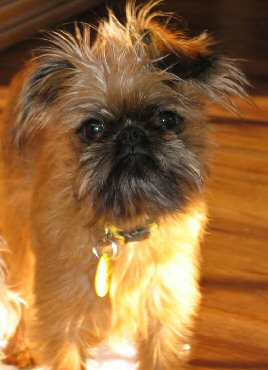
#1. "The Griffon is a sturdy toy dog who is often thought to look like a Star Wars Ewok."
#2. "The large head is round with a domed forehead and a deep stop."
#3. "The black nose is very short."
#4. "The dog has an overbite with a hanging tongue."
#5. "The black eyes are wide set and prominent with long, black eyelashes."
#6. "The ears are high set, either cropped or left natural. Natural ears are carried semi-erect, when cropped the ears stand up coming to a point."
#7. "The straight boned legs are medium in length."
#8. "The tail is set high and docked to about 1/3 of the length."
#9. "There are two types of coats, rough and smooth. The rough coat is dense and wiry. On the smooth coat, also called the Petit Brabancon variety, where the fur is short, tight, glossy and straight. The short coats are easier to groom. Coat colors include red (reddish brown with a little black at the whiskers and chin), belge (a mixture of red-brown and black usually with black mask and whiskers), black and tan (black with reddish brown markings under the chin, legs, above each eye, the edges of the ears and around the vent), and solid black."
#10. "The Griffon is an intelligent cheerful dog with a terrier-like disposition."
#11. "With lots of personality, they make a fine companion dog and are good with other dogs and cats."
#12. "Affectionate, charming, lively and curious, they love everyone."
#13. "The Griffon cannot live outside in a kennel."
#14. "If you feed them table scraps, they may become greedy or picky eaters."
#15. "May be difficult to housebreak."
#16. "They make good watchdogs and can be taught to perform tricks."
#17. "Because of this dogs almost human looking facial expression, they have not only been nicknamed "monkey face", but are prone to being treated as if they are not dogs, but little humans. This causes something called, Small Dog Syndrome. The dog begins to believe THEY are the ruler of the home, and THEY tell THEIR humans what they can and cannot do. When a human allows a dog to take over the home, it causes varying degrees of behavior problems, including, but not limited to, willfulness, demanding, obsessive barking, guarding, separation anxiety, snapping and even biting. They may become untrustworthy with children and sometimes even adults. Without enough mental and physical exercise, they will become high-strung, moody and sensitive. These are NOT Griffon traits, but behaviors brought on by the lack of a firm, confident, consistent pack leader, who provides rules they must follow and limits to what they are and are not allowed to do along with the right amount and type of exercise."
#18. "Height: 7-8 inches (18-20 cm.)"
#19. "Weight: 6-12 pounds (2.5-5.5 kg.)"
#20. "Prone to slipped stifle, eyes and respiratory problems. Sensitive to the heat. Not the easiest whelpers, dams often require a cesarean section."
#21. "Griffons are good dogs for apartment life and will do okay without a yard."
#22. "These little dogs are very active indoors, however, like all dogs, they still need to be taken for a daily walk to fulfill a dog's primal instinct to walk."
#23. "Life Expectancy: About 12-15 years."
#24. "Litter Size: 1 - 3 puppies: Average 2."
#25. "The coat of the Rough requires a lot of attention, however the coat of the pet dogs may be clipped. The Griffon sheds little to no hair."
#26. "There are three varieties of Griffon. The Brussels Griffon, Belgian Griffon and Petit Griffon. The Belgian Griffon has a long, wiry coat with fringe around the face. The Brussels Griffon has a wiry coat that is longer than the Belgian Griffon. The Petit Brabancon has a short, smooth coat. The Brussels Griffon was first shown at the Brussels Exhibition of 1880. An early example of the breed is depicted in a Van Eyck, the Flemish painter. Once kept by cab drivers of 17th century Brussels to rid their stables of vermin, the Brussels Griffon became a companion breed by virtue of its appealing character. The Smooth coated Petit Brabancon was most likely crossed with Pug blood. Other breeds including the Affenpinscher, English Toy Spaniel, Belgian street dog, Yorkshire Terrier and Irish Terriers may have contributed to the modern Griffons. The AKC recognizes only the variety known as the Brussels Griffon. Its American standard allows all of the color varieties, black through red, as well as the smooth variety (Brabancon). FCI, conversely, divided them into three breeds: smooth (Petit Brabancon), rough reds (Brussels Griffon) and roughs of other colors (Belgian Griffon). Therefore, in Europe they are shown separately with no interbreeding between the varieties. In America, although the same parameters exist, they are combined into one breed with different colors and coat varieties. It was the Brussels Griffon that appeared in the movie "As Good as it Gets". Somewhat rare, Griffons may be very difficult to find."

Info from: http://www.dogbreedinfo.com/griffon.htm
Pic of Griffon from: http://www.small-breed-dogs.com/images/brusselsgriffon.jpg

Monday, October 12, 2009

Berners!


Swiss Bernese Mountain Dogs are so cool so why don't you have a look at some facts about them!

#1. "The Bernese Mountain Dog is a large, strong, sturdy, agile dog."
#2. "The body is slightly longer than it is tall."
#3. "The broad head is flat on the top with a moderate stop."
#4. "The teeth meet in a scissors bite."
#5. "The medium-sized, triangular ears are set high and rounded at the tip."
#6. "The straight legs are strong."
#7. "The bushy tail is carried low."
#8. "The feet are round with arched toes."
#9. "The weather-resistant coat is moderately long, thick and slightly wavy or straight. The dog is tricolor with symmetrical markings of black, rust and white. The base of the dog is black. The dog has a white blaze on the chest, and white on the head, toes and tip of the tail. Rust is on the cheeks reaching to the corners of the mouth, over each eye, on each side of the chest, on all four legs and underneath the tail."
#10. "These cheerful dogs love children."
#11. "They are very intelligent, easy to train and are natural watchdogs, but not overly dominant."
#12. "A friend for life."
#13. "Self-confident, alert and good-natured."
#14. "Socialize well as a puppy."
#15. "Slow to mature, acting like a puppy longer than other breeds."
#16. "Rather friendly with strangers, and are generally good with other pets and dogs."
#17. "The Bernese needs to be with people and not confined to the backyard or a kennel."
#18. "These dogs are sensitive and should be trained firmly, but gently."
#19. "Owners will only run into issues with this dog if they are not displaying a natural leadership towards the dog, treating it more like their baby and lacking in the knowledge as to what dogs instinctually need to be stable minded. Owners who fail to convince the dog humans are alpha may find themselves with a totally different dog than what is described above. For a dog to feel secure they need to clearly know the rules so they can follow them, thriving in structure, along with a daily pack walk to satisfy their instinct to migrate."
#20. "The Bernese Mountain Dog was bred for draft work and can be trained to pull a cart or wagon."
#21. "Height: Dogs 24-28 inches (61-71cm.)
Bitches 23-27 inches (58-69cm.)"
#22. "Weight: Dogs 85-110 pounds (38-50kg.)
Bitches 80-105 pounds (36-48kg.)"
#23. "The Bernese Mountain Dog is prone to bloat, cancer and eyelid problems, hip and elbow dysplasia. Gains weight easily. Do not over feed."
#24. "Bernese Mountain Dog are not recommended for apartment life. They are relatively inactive indoors and will do best with at least a large, fenced-in yard. Because of their thick coats they are sensitive to the heat and would much rather be in cold temperatures."
#25. "Large active dogs such as these need regular exercise, which include a long daily walk."
#26. "Life Expectancy: About 6-8 years. The average lifespan of the Bernese has decreased in recent years from 10-12 yrs to 6-8 yrs. The BMD Club of America did a health survey in 2000 with 1,322 dogs. The average age of death was 7.2 yrs. Cancer is unfortunately a very large part of the Berner world and many Berners die young. One source states "I know of several that died of cancer at 3-4 yrs old and one that died two days before his 2nd birthday. The BMD Club of America is aggressively researching this cancer issue! We must see if we can end this sad situation."
#27. "Litter Size: Varies from 1 - 14 puppies: Average 8."
#28. "Daily to weekly brushing of the long thick coat is important, with extra care needed when the coat is shedding. Bathe or dry shampoo as necessary. This breed is a seasonal, heavy shedder."
#29. "The Bernese Mountain dog originated in the Swiss mountains, Switzerland. Many 18th century paintings show dogs which looked just like the Bernese type dog. The breed was named for the Canton of Bern. They were working dogs particularly good at draft work, pulling carts to market. They also were used to drive dairy cattle, to watch over the farm and as a companion to the farmers. By the end of the 19th century many other working dogs were being imported to Switzerland, which brought the numbers of the Bernese down as workers began to use other types of dogs. An effort was made by a group of people including Professor Albert Heim and Franz Schertenleib to preserve the breed. They went around finding what remaining dogs they could in order to stabilize the Bernese. Today the breed makes a wonderful companion and they still to this day enjoy whatever draft work you can give them. The breeds talents are tracking, herding, watch, guarding, search & rescue, carting, and competitive obedience."

Info and pics from: http://www.dogbreedinfo.com/bernesemountain.htm


Saturday, October 10, 2009

Weims!


Weimaraners are so cool so why don't you have a look at some facts about them!

#1. "Pronunciation: VI -mer-ron er."
#2. "The Weimaraner is a moderately large, athletic, working dog."
#3. "The medium sized head has a moderate stop with a medial line going down the forehead."
#4. "The nose is gray and the teeth meet in a scissors bite."
#5. "The somewhat wide-set eyes come in shades of light amber, gray or blue-gray."
#6. "The high-set ears are long and pendant, folded forward hanging down along the sides of the head."
#7. "The front legs are straight with webbed, compact feet."
#8. "The toenails are gray or amber in color."
#9. "The tail is customarily docked to 1 ½ inches (4cm) when the dog is two days old."
#10. "The top line slopes gently downward from the shoulders to the rump."
#11. "The short, smooth coat is tight to the whole body and comes in shades of mouse-gray to silver-gray, blending with darker shades on the body and lighter shades on the head and ears. It also comes in a rarer longhaired variety. All shades of gray are accepted. There is sometimes a small white marking on the chest."
#12. "Happy, loving, intelligent, cheerful, and affectionate."
#13. "Good with children."
#14. "Without the proper exercise they will be very rambunctious and difficult to control."
#15. "They learn quickly but will get bored if the training is the same thing over and over again. This breed needs firm, experienced training starting at puppyhood, with an owner who understands how to be a dog's pack leader, or they can become stubborn and willful. Without this proper leadership, they can become combative with other dogs."
#16. "This hunting dog has a strong prey instinct and should not be trusted with small non-canine animals such as hamsters, rabbits and guinea pigs."
#17. "Socialized well with people, places, things and other animals."
#18. "Brave, protective and loyal, makes a good guard and watchdog."
#19. "Weimaraners absolutely crave leadership. They want to know what is expected of them and for how long. If this is not made consistently clear in their head they will not be stable minded, may be stressed, possibly developing separation anxiety, becoming destructive and restless. Owners should not be harsh, but calm with a natural air of authority to their demeanor. These things are instinctually essential to having a happy, behaved, balanced dog."
#20. "Give your Weim plenty of extensive exercise, or he will become very restless and over excited."
#21. "Because this breed is so full of energy, the first thing they need to learn is sit. This will help prevent jumping, as they are strong dogs and will knock over elderly or children by accident."
#22. "This breed especially should not be hit to discipline, they become wary easily. Once they have a fear of someone/something, they look to avoid and training is difficult."
#23. "They are so eager to please, and motivated by reward (food or praise). Once a trick is learned, the dog will leap to repeat for praise."
#24. "Although they are often mistaken as dumb, because they have such focus, if the trick or owners request isn't their focus at the time, it will not occur!"
#25. "Spend a lot of time with short leash walk, next to you. If left to run ahead they will pull like a train and start to believe they are alpha, as pack leader goes first."
#26. "This breed likes to bark, and needs to be corrected if it becomes excessive."
#27. "Very hardy, with a good sense of smell, and a passionate worker, the Weimaraner can be used for all kinds of hunting."
#28. "Height: Dogs 24-27 inches (61-69cm)
Bitches 22-25 inches (56-63cm.)"
Weight: Dogs 55-70 pounds (25-32kg)
Bitches 50-65 pounds (23-29kg.)"
#29. "Prone to bloat, it is better to feed them two or three small meals a day rather than one large meal. Also can be prone to hip dysplasia, hypertropic osteodystrophy (excessive rapid growth) and tumors."
#30. "Weimaraners will do okay in an apartment if it is sufficiently exercised. They are relatively inactive indoors and will do best with at least a large yard. They are not suited to outdoor kennel life."
#31. "These are powerful working dogs with great stamina. They need to be taken for a daily, long walk or jog. In addition, they need plenty of opportunities to run free. Do not exercise them after meals. It is best to feed a dog after a long walk, as soon as they cool down."
#32. "Life Expectancy: About 10-12 years."
#33. "The smooth, short-haired coat is easy to keep in peak condition. Brush with a firm bristle brush, and dry shampoo occasionally. Bathe in mild soap only when necessary. A rub over with a chamois will make the coat gleam. Inspect the feet and mouth for damage after work or exercise sessions. Keep the nails trimmed. This breed is an average shedder."
#34. "The breed is several centuries old and is derived from the same selective stock as other German hunting breeds and is a descendant of the Bloodhound. The Weimaraner is a good all-around hunting dog and an excellent pointer. They were originally used as big game hunters such as bear, deer and wolves, but is used more today as a bird dog and even a water retriever. A Weimaraner appeared in a Van Dyck painting of the early 1600's. Howard Knight, who founded the first American Weimaraner breed club, imported the dogs to the United States in 1929. The popular children's TV show Sesame Street has been known to plays skits with this breed dressed up in human clothes. The Weimaraner was first recognized by the AKC in 1943. Some of its talents include: hunting, tracking, retrieving, pointing, watchdog, guarding, police work, service dogs for the disabled, search & rescue, and agility."

Info and pics from: http://www.dogbreedinfo.com/weimaraner.htm


Thursday, October 8, 2009

Norwiches!


Norwich Terriers are so cool so why don't you have a look at some facts about them!

#1. "The Norwich Terrier is a short, sturdy, strong little dog."
#2. "The head is slightly rounded, wide with a good amount of space between the ears."
#3. "The wedge shaped muzzle is strong, with a well-defined stop."
#4. "The small, oval shaped eyes are dark in color."
#5. "The medium sized ears stand erect."
#6. "The legs are straight and the feet are round with black toe nails."
#7. "The medium sized tail is set high level with the top line and is usually docked by half."
#8. "The wiry, straight coat is about one and a half to two inches long. Coat colors include red, wheaten, tan, black and tan, or grizzle with or without dark points and occasionally with white markings."
#9. "Among the smallest of the working terriers Norwich Terriers are active, courageous, affectionate, balanced and without any nervousness or quarrelsomeness."
#10. "They are easy to train, and need consistent rules to follow."
#11. "These little dogs love everyone and are good with children."
#12. "Because of their ratting instincts they tend to love anything you can toss so they can chase after it, such as toys, balls, sticks or bones."
#13. "If left outside for along period of time with nothing to do, without providing a long pack walk to drain their energy, they can become barkers and diggers."
#14. "This breed is generally good with other pets such as cats and dogs, but should not be trusted with small animals such as hamsters, pet rats, mice or guinea pigs."
#15. "Do not allow this little dog to develop Small Dog Syndrom, where the dog believes he is pack leader to humans. This can cause many varying degrees of behavior problems including, but not limited to, separation anxiety, jealousy and guarding behaviors."
#16. "They can be difficult to housebreak."
#17. "Height: 10 inches (25cm.)"
#18. "Weight: 10-12 pounds (4.5-5.5kg.)"
#19. "These are the smallest of the Terriers."
#20. "Some lines are prone to back problems and genetic eye diseases, but are generally healthy."
#21. "The Norwich Terrier will do okay in an apartment if it is sufficiently exercised. They are fairly active indoors and will do okay without a yard."
#22. "These little dogs were bred to work. They are energetic and thrive on an active life and need to be taken on a daily walk. They can jog for short distances. While out on the walk the dog must be made to heel beside or behind the person holding the lead, as in a dog's mind the leader leads the way, and that leader needs to be the human. Teach them to enter and exit all door and gateways after the human."
#23. "Life Expectancy: About 12-15 years."
#24. "The shaggy, medium-length, waterproof coat is relatively easy to care for, but daily combing and brushing is important. Little clipping is required. Take extra care when the dog is shedding. Bathe and dry shampoo only when necessary. This breed is a light shedder."
#25. "Developed in East Anglia, England, the Norfolk and Norwich Terriers used to be the same breed with two different ear types, both were referred to as the Norwich Terrier. The English were the first to separate them in 1964. In 1979 the AKC officially deemed them as separate breeds. The Norwich having small perked ears and the Norfolk with dropped ears. Another slight difference is, the Norfolks are angular in shape and the Norwich Terriers are more round. The dogs were used as barnyard ratters and to bolt foxes that had gone to ground during a fox hunt. Their small size allowed them to get in and out of fox dens easily. After the foxes were flushed from their dens hunters on horseback would resume the chase with their hounds."

Info from: http://www.dogbreedinfo.com/norwichterrier.htm
Pic of Norwich Terrier face from: http://www.thebestofbreeds.com/catalog/images/NorwichTerrier.jpg
Pic of Norwich Terrier puppy in grass from: http://www.nakedauthors.com/uploaded_images/NorwichTerrier-709113.jpg
Pic of Norwich Terrier adult standing in grass from: http://www.pedigree.com.au/breeds/images/norwich_terr.jpg

Sunday, September 27, 2009

Danes!


Great Danes are the coolest pooches in town so why don't you have a look at the awesome qualities that makes them pretty hot K9s!

#1. "The Great Dane is a giant, powerful dog."
#2. "Square in body, but females may be slightly longer than tall."
#3. "The long head is rectangular in shape."
#4. "The nose is black, blue/black on blue Danes or black spotted on the harlequins."
#5. "The dark, deep-set eyes are medium in size."
#6. "The medium sized ears are set high and either cropped or left natural. If left in their natural state they are folded forward hanging close to the cheek. When cropped they stand erect and are large in proportion to the rest of the head."
#7. "The well arched neck is set-high, firm and muscular."
#8. "The front legs are perfectly straight."
#9. "The feet are round with dark toenails."
#10. "The tail is set high, thicker at the base and tapering to a point."
#11. "The coat is short and thick. Colors come in brindle, fawn, black, blue, mantle harlequin and sometimes merle. Although not a recognized color, chocolate does occur in a recessive gene. Merle is a common result of harlequin breeding, but it is not a recognized color."
#12. "The Great Dane has a good disposition, often called a "gentle giant"."
#13. "Charming and affectionate, they are playful and patient with children."
#14. "They love everyone and need to be around people."
#15. "The Great Dane does not bark much and only becomes aggressive when the circumstances require it."
#16. "They are reliable, trustworthy and dependable."
#17. "Courageous and loyal, they are good watchdogs."
#18. "The Great Dane does not stay little for long and consistent training and rules should start right from puppyhood."
#19. "This giant dog should be taught not to jump or lean on people."
#20. "The objective in training this dog is to achieve a pack leader status. It is a natural instinct for a dog to have an order in their pack. When we humans live with dogs, we become their pack. The entire pack cooperates under a single leader. Lines are clearly defined. You and all other humans MUST be higher up in the order than the dog. That is the only way your relationship can be a success."
#21. "Dogs who know their place below humans in the pack order will be good with children."
#22. "If you are not a firm, confident, consistent pack leader who knows how to correct the dog when he is showing signs of aggression, the dog can be dog-aggressive. Owners who know how to properly handle their dogs will not have this issue."
#23. "Height: Dogs 30-34 inches (76-86 cm.)
Bitches 28-32 inches (71-81 cm.)"
#24. "Weight: Dogs 120-200 pounds (54-90 kg.)
Bitches 100-130 pounds (45-59 kg.)
Dogs of even larger size are more prized."
#25. "Prone to hip dysplasia, bloat, heart disease, tumors and tail injuries. Jogging is not recommended until the dog is at least one year old, but walking is necessary. Not a long lived breed."
#26. "The Great Dane will do okay in an apartment if it is sufficiently exercised. It is relatively inactive indoors and does best with at least a large yard."
#27. "The Great Dane needs plenty of exercise. They need to be taken on a daily long walk."
#28. "Life Expectancy: The average is under 10 years, however some can live to be 12-13 years old."
#29. "The smooth short-haired coat is easy to groom. Comb and brush with a firm bristle brush and dry shampoo when necessary. Bathing this giant is a major chore, so it pays to avoid the need by daily grooming. The nails must be kept trimmed. This breed is an average shedder."
#30. "The Great Dane is a very old breed, known as the "Apollo of all dogs.". Dogs resembling the Great Dane have appeared on Greek money dating back to 36 B.C. There are also drawling's of these dogs on Egyptian monuments from roughly 3000 B.C. The earliest writings of dogs that sounded like Great Danes were in Chinese literature dating back to 1121 B.C. In 407 A.D. German Gaul and part of Italy and Spain were invaded by an Asiatic people (the Alans) who brought with them powerful mastiff-like dogs. They were admired for their ability to bring down bear and wild boar. The dogs were thought to have been Wolfhound mixed with the old English Mastiff. With selective breeding the Greyhound was added in to create the Great Dane. Besides being used as a hunter, they were also used as estate guard dogs. Despite the fact that they are called Danes in English, they have nothing to do with Denmark. The Great Dane was recognized in 1887. Some of the Great Dane's talents are tracking, watchdog and carting."

Info from: http://www.dogbreedinfo.com/greatdane.htm
Pics from: http://www.dogbreedinfo.com/greatdane.htm

Sunday, September 20, 2009

Belgians!


Belgian Sheepdogs, also known as Belgian Shepherds and Belgian Groenendaels, are so cool so why don't you have a look at some facts about them!

#1. "The body of the Belgian Sheepdog is well muscled, with tight skin and a squarely proportioned body."
#2. "The overall size of the head should be in proportion with the body."
#3. "The top of the skull is flattened rather than rounded."
#4. "The lips should be tight.''
#5. "The dog's bite should be either even or scissors."
#6. "The medium sized, almond-shaped eyes are brown."
#7. "The erect ears are triangle in shape and in proportion to the head."
#8. "The legs are parallel, straight and strong."
#9. "The feathered tail is strong at the base with the tailbone reaching the hock."
#10. "The feet are cat-like in shape."
#11. "The weather-resistant coat is moderately long, with a ruff of fur around the neck and extra feathering on the legs, tail and underneath the body. The coat color is black, either solid or with a small amount of white on the chest, chin or toes."
#12. "The Belgian Shepherd/Groenendael is the most popular of the four Belgian Sheepdogs."
#13. "It is a very bright and obedient dog. determined and observant with strong protective and territorial instincts."
#14. "This breed needs extensive socialization, preferably from an early age, to prevent them from becoming shy or sensitive."
#15. "Belgian Shepherds need an experienced master who is firm, but not heavy handed."
#16. "If you are harsh or overbearing they will become uncooperative."
#17. "Owners need to display a confident, natural authority over the dog. Consistent rules must be set and made clear."
#18. "This breed is instinctively protective so it should be trained and socialized very well from an early age. Puppies should be socialize right from birth."
#19. "Good for working and competition obedience."
#20. "These dogs make excellent police and guard dogs. This type of work is currently their main occupation."
#21. "They do however, make excellent pets if they have owners who can challenge their minds with an air of leadership."
#22. "They are ever watchful, alert and loyal."
#23. "Belgian Sheepdogs are good with children if socialized well with them."
#24. "This breed needs to be part of the family and not locked up in a kennel."
#25. "They need leadership, daily exercise along with training and companionship, for without it they may become destructive and hard to handle."
#26. "The Belgian Shepherd is high energy, with a high mental capacity, and are quick to comprehend."
#27. "They need a job to do, especially if you are dealing with working lines."
#28. "Take care when introducing this dog with small non-canine pets. They can be rather dominant toward other dogs and need an owner who can communicate to the dog that dominance is an unwanted behavior. Provided they are correctly socialized with cats and other pets, they should not present any problems."
#29. "This Belgian Sheepdog may instinctively display herding behavior such as chasing and circling, moving effortlessly for hours and nipping at people's heels. They must be taught not to do this to people."
#30. "This is a very demanding dog that is becoming more and more popular."
#31. "It needs an experienced owner for it can easily be difficult to control unless the owner knows how to handle him."
#32. "The way the owner handles the dog can produce wide differences in temperament and aggressiveness. Talk to someone experienced with the breed before you buy your dog."
#33. "These dogs are often impressive; don't base your purchase solely on achievement records and appearances."
#34. "Only adopt this type of dog if you fully understand what it means to be alpha."
#35. "Height: Dogs 24-26 inches (61-66 cm.)
Bitches 22-24 inches (56-61 cm.)"
#36. "Weight: Dogs 65-75 pounds (29-34 kg.)
Bitches 60-70 pounds (27-32 kg.)"
#37. "This hardy, healthy breed has no major health concerns. Some minor concerns that have been seen are epilepsy, skin allergies, eye problems, excessive shyness, excessive aggressiveness and occasionally seen hip dysplasia and elbow dysplasia. Do not overfeed this breed, for it has a tendency to become obese and lazy."
#38. "The Belgian Shepherd/Groenendael will do okay in an apartment if it is sufficiently exercised. It is moderately active indoors and will do best with at least an average-sized yard. The Groenendael can sleep outdoors, although he prefers to be with his people."
#39. "This is a working dog that is accustomed to an active outdoor life. As such it needs a lot of exercise, including a long daily walk. In addition, they will greatly benefit being off the leash as much as possible in a safe area."
#40. "Life Expectancy: About 13-14 years."
#41. "Litter Size: Average 6 - 10 puppies."
#42. "The Belgian Shepherd/Groenendael has a long, straight, medium length, heavy outer coat and a dense under coat that requires daily combing and brushing. Extra care should be given when the dog is shedding. Clip out mats that form, particularly in the ruff and on the legs, and clip hair from between the toes and on the outer ears. This breed is a seasonal, heavy shedder, shedding twice a year with some additional shedding throughout the year."
#43. "The Belgian Groenendael, as it is called worldwide, is simply called the Belgian Shepherd by the American Kennel Club. It was named after the village of Groenendael in Belgian. It is one of the four varieties of the Belgian Sheepdogs, the Belgian Groenendael, Belgian Malinois, Belgian Tervuren, and the less popular Belgian Laekenois, which all share a common foundation. In most countries and breed clubs all four dogs are considered the same breed with different varieties in coat types. All four dogs share a breed standard in all countries accept for the AKC who since 1959 recognizes them as separate breeds and does not recognize one of the four (the Laekenois), whereas the UKC, who is also a U.S. registry does recognize all four varieties as one breed. Versatile and highly intelligent, all four varieties of the Belgian Sheepdog excel at a variety of talents, including but not limited to police work such as, narcotics and bomb detection, protection and schutzhund, search and rescue, also obedience, agility, tracking, herding, sled and cart pulling and as a guide for the blind and assistant to the disabled. These high energy, extremely intelligent dogs need leadership, to be challenged, and well exercised daily and therefore are not for everyone, but can make an excellent family companion with the right owners. The Belgian Malinois was the first of the four sheepdogs to establish type. Until the other four were established in type they were called "Berger Belge a poil court autre que Malinois", which meant "Belgian short-coated Sheepdog who is not the Malinois." Today all four sheepdogs are popular in Belgian. Today the Laekenois and Malinois more often used as working type dogs, than the Belgian Groenendael and Tervuren but all types still make excellent workers."

Info from: http://www.dogbreedinfo.com/belgiangroenendael.htm
Dog laying in grass pic from: http://www.mylot.com/w/photokeywords/belgian+sheepdog.aspx
Pic of dog standing up from: http://www.adespets.co.cc/dog-breeds-profile/herding-group/belgian-sheepdog-is-playful-alert-watchful-and-protective-dog.html/comment-page-1

Saturday, September 19, 2009

BRT'S!!


Black Russian Terriers are so cute so why don't you have a look at some facts about them!:

#1. "Black Russian Terriers are more than mid-size."
#2. "This rare Russian breed is robust and strong with a good nervous system."
#3. "Large, powerful, stable and alert."
#4. "The nose is large, and fully pigmented, black in color."
#5. "The lips are full, rounded and black at the ridges and the jaws are large and powerful."
#6. "The mouth should be meaty, and if it's not, it is a major default in the show ring."
#7. "The dark eyes are medium-sized and set apart. Rims should be black and almond-shaped."
#8. "The ears are triangular in shape with a rounded apex and pendular. Cropped ears are not acceptable. The length of the ear should reach the outside corner of the eyelids. The ears are set rather high."
#9. "The neck should be thick, muscular and powerful."
#10. "The very large, bear-like feet have tough, black, thick pads and the nails are large and dark in color."
#11. "The legs should be covered with 2 to 4 inches of coarse hair."
#12. "The feet are very large, fully covered with hair and with large, black pads."
#13. "The appearance is full."
#14. "They appear to be light on their feet."
#15. "The tail is cropped and set high."
#16. "The waterproof coat should be black. Whit or brown markings are disqualifying. They appearance of individual grey hairs are expected."
#17. "Black Russian Terriers are brave and very observant."
#18. "Suspicious of strangers, they have a strong, protective instinct that will appear at the age of one and a half to two years."
#19. "Growing puppies should be treated lovingly but firmly, to steer them in the right direction."
#20. "Puppies are sensitive, playful, adaptive, and quick to learn."
#21. "They are inquisitive and will get into everything."
#22. "Even as an adult they are enthusiastic about children and love to play with them."
#23. "This breed seeks intense contacts with humans and animals."
#24. "Black Russian Terriers have a strong and balanced temperament."
#25. "They avoid fighting with other dogs, although males cannot live with other big, dominant dogs if the owners are not 100% alpha over both of them. This breed can easily live with none-dominant or small dogs, cats, horses, rabbits etc."
#26. "They are easy to housebreak and should easily except the leash."
#27. "Black Russian Terriers love to please their master(s)."
#28. "Height: 25-29 inches (64-74 cm.)"
#29. "Weight: 80-143 pounds (36-65 kg.)"
#30. "Life Expectancy: About 10-11 years."
#31. "Litter Size: 6-12 puppies."

Info from: http://www.dogbreedinfo.com/blackrussianterrier.htm
Pic of BRT from: http://www.greatdogsite.com/admin/uploaded_files/1198065917black_russian_terrier.jpg

Tuesday, September 15, 2009

English Setters!


English Setters are so cool so why don't you have a look at some facts about them!

#1. "The English Setter is a beautiful, long and lean, working gun dog."
#2. "The skull is oval in shape when viewed from above."
#3. "The nose has wide nostrils and is either brown or black in color."
#4. "The teeth meet in a level or scissors bite."
#5. "The large, round eyes are dark brown."
#6. "The ears are set back and low, hanging down even with the eye level, covered with silky hair."
#7. "The large eyes are hazel in color."
#8. "The chest is deep, but not too wide or round."
#9. "The tail starts at the top line, thicker at the base tapering to a point with straight, silky feathering."
#10. "The coat is flat, silky and wavy, with feathering on the tail, back of the legs, underside, abdomen, chest and the ears. Coat colors include white with blue, lemon, orange, or brown of various markings. The speckling on the unique coat can be light to heavy and of any size. Some dogs are tri-color (blue, white & brown)."
#11. "The English Setter is a quick, quiet worker with an excellent nose and a coat that keeps the dog comfortable in both hot and cold weather."
#12. "A very gentle, calm dog."
#13. "Friendly and excellent with children they are easy going, loving all the affection they can get."
#14. "Exuberant and vivacious outdoors, but relatively inactive indoors."
#15. "With meek owners they will become willful."
#16. "Can be difficult to housebreak."
#17. "Rules, structure and training should start early to prevent development of bad habits."
#18. "They need authoritative, calm, but firm, confident and consistent owners, but should never be harshly treated. They are sensitive to the tone of one's voice and will not listen if they sense that they are stronger minded than their owner, however they will also not respond well to harsh discipline. Owners need to be calm, yet possess an air of natural authority."
#19. "Needs a lot of structure and enjoys playing with other dogs."
#20. "English Setters are adequate watchdogs."
#21. "They like to roam, dig and are good jumpers."
#22. "There are two types, field lines and show lines (bench). Field types are bred for hunting and field trial work and are generally somewhat smaller and lighter. The bench type are bred for conformation shows. Both types are energetic and need daily exercise, but field lines have a higher energy level and need even more exercise."
#23. "The dominancy level in this breed varies even within the same litter."
#24. "If you are not the type of person who can display a natural air of calm, but firm authority, then be sure to choose a pup who is more submissive."
#25. "The temperament of both show and field lines vary widely, depending upon how the owners treat the dog and how much and what type of exercise they provide."
#26. "The English Setter can become a nuisance barker if left out in the back yard for long periods of time and if owners do not provide enough mental and physical stimulation and/or leadership. Dogs who bark a lot need to be told this is not acceptable and need their bodies and minds challenged."
#27. "Some English Setters may be light droolers, although not obsessively like some of the Mastiff type dogs."
#28. "Height: Dogs 24-27 inches (61-69cm)
Bitches 23-26 inches (58-66cm.)"
#29. "Weight: Dogs 55-80 pounds (25-36kg)
Bitches 45-70 pounds (20-32kg.)"
#30. "Prone to hip dysplasia. Be careful not to overfeed this breed, for they tend to gain weight easily. English Setter females are prone to false pregnancies."
#31. "Not recommended for apartment living and does best with at least an average-sized yard."
#32. "All setters need a daily long, brisk walk or jog, where the dog is made to heel beside the human holding the lead, or they will become restless and difficult to manage. Whether we humans realize it or not, a dog who is allowed to walk ahead of the human holding the lead will instinctually believe he is pack leader to humans, as in a dogs mind, the leader leads the way. In addition, they will also enjoy running free in the safety of a fenced yard."
#33. "Life Expectancy: About 10-12 years."
#34. "Regular combing and brushing of the soft, flat, medium-length coat is all that is required to keep it in excellent condition. It is important to check for burrs and tangles, and to give extra care when the dog is shedding. Bathe or dry shampoo only when necessary. Trim the hair on the bottom of the feet and clip the nails. This breed is an average shedder."
#35. "The first strains of setters were developed in France in 1500, obtained from the Spanish pointer and the French pointer. These early setters were called "Setting Spaniels", named after the way they would crouch down after finding the pray to allow the hunter to throw a net over it. In the early 1800's they were brought to Great Britain where a breeder, named Sir Edward Laverack developed them into the English Setter we know today using early French hunting dogs. He bred out the trait of crouching down more to an almost sitting stance, so the dogs would be easier seen by the hunters who now had guns. English Setter is often called the Laverack Setter. The word "setter" comes from the way the dogs appear to almost be sitting down when they discover game. Laverack's dogs are the foundation stock for many of today's top show dogs. The Llewellin Setter was bred out of English Setter lines by an English breeder named Llewellin. The English Setter's talents include hunting, tracking, retrieving, pointing, watchdog and agility."

Info from: http://www.dogbreedinfo.com/englishsetter.htm
Pic of English Setter face from: http://cdn-www.dailypuppy.com/media/dogs/anonymous/Hannah_English_Setter_01.jpg_w450.jpg
Pic of other English Setter from: http://www.dogbreedinfo.com/englishsetter.htm

Saturday, September 12, 2009

Shelties!


Shetland Sheepdogs are so cute so why don't you have a look at some facts about them:

#1. "The Sheltie is a strong, nimble, lightly built, beautiful dog, with a long, wedge-shaped head."
#2. "Its coat is rough with a soft undercoat."
#3. "Some say they are a perfect miniature copy of the long-haired collie."
#4. "The glorious long double coat sports a lion-like mane and frill around the neck, and comes in blue merle, sable and black with various amounts of white and/or tan."
#5. "The outer coat is lined with a dense, woolly undercoat."
#6. "The tail should reach to the hock."
#7. "The almond-shaped eyes are generally dark, except in blue merle dogs where they may be blue or merle color."
#8. "The dog should have a watchful, gentle, questioning and intelligent expression."
#9. "The nose should be black."
#10. "The Sheltie is an agile, swift dog and a good jumper."
#11. "The Sheltie is an outstanding companion dog with a delightful temperament."
#12. "Gentle, sensitive, loyal and dainty."
#13. "Very lively, intelligent and trainable."
#14. "The Sheltie is one of the smartest breeds, very willing to please and obey."
#15. "Loving, loyal and affectionate with its family."
#16. "Socialize extensively as a puppy."
#17. "It is a good guard and watchdog."
#18. "They like to be kept busy."
#19. "The Sheltie is above all an intelligent herder, capable of both commanding large cattle and holding small sheep in check."
#20. "The herding instinct is still very strong in many of them."
#21. "They love to chase things. Teach this dog not to chase cars."
#22. "A Sheltie should not be allowed to run free near a road as it may decide to chase a car or something else it sees across the road, running a high risk of getting hit by a car."
#23. "Because of its beauty and kindness, the Sheltie has become a popular companion dog."
#24. "Height: 13-16 inches (33-40.6 cm.)"
#25. "Weight: 14-27 pounds (6.4-12.3 kg.)"
#26. "Life Expectancy: About 12-15 years."

Info from: http://www.dogbreedinfo.com/shetlandsheepdog.htm
Pic of Sheltie from: http://www.pups4sale.co.nz/shetland_sheepdog_02_puppies_for_sale.jpg

Thursday, September 10, 2009

Spinones!


Spinone Italianos are so radical so why don't you have a glance at some facts about them!:

#1. "The Spinone Italiano, also known as the Spinone, Italian Spinone, or Italian Griffon is a large, rugged dog of distinctive appearance."
#2. "It has a long head, with hanging ears, and eyes described as "human like."
#3. "Everything about this breed indicates great strength as well as stamina."
#4. "Suited for hunting in all climates and on all terrain."
#5. "Its coat protects it from the water and freezing temperatures of the swamp. It goes nonchalantly into cold, deep water-- being an excellent swimmer and a model retriever."
#6. "Extremely intelligent, happy, upbeat and enthusiastic, the Spinone Italiano is a pleasant, easy-going breed."
#7. "It is easily satisfied when treated as a lower ranking member of its human pack family."
#8. "Although serious when at work in the field, it definitely has a clownish side that is often quite entertaining."
#9. "Never bossy or whiny, unless it does not so humans as pack leader."
#10. "This gentle soul loves children, those it knows, and those he does not. Children must be taught how to display leadership skills."
#11. "Its great patience should never be taken for granted, for abuse is abuse, whether intentional or not."
#12. "This breed gets along well with other animals, particularly enjoying another dog's company."
#13. "It wants to be with its people, whether that means at home or traveling."
#14. "It is a quiet breed in general, but may occasionally howl along with a siren."
#15. "The Spinone is not a protection breed."
#16. "He is either unlikely to attack under any circumstance or would only do so if it or its family is directly threatened."
#17. "The Spinone learns fast."
#18. "An intelligent hunter, they are aware of the difference between a real hunt and an exercise. For example, one breeder mentioned that his dog is perfectly willing to pick up downed birds, but he is reluctant to retrieve a training dummy."
#19. "Height: 22 1/2-27 1/2 inches."
#20. "Weight: 61-85 pounds."
#21. "Life Expectancy: About 12 or more years."

Info from: http://www.dogbreedinfo.com/spinone.htm
Pic of Spinone from: http://www.greatdogsite.com/admin/uploaded_files/1198060072spinone_italiano.jpg

Tuesday, September 8, 2009

Bichons!


Bichon Frises are so cool so why don't you have a look at some facts about them:

#1. "Pronunciation: Bee-shon Free-zay."
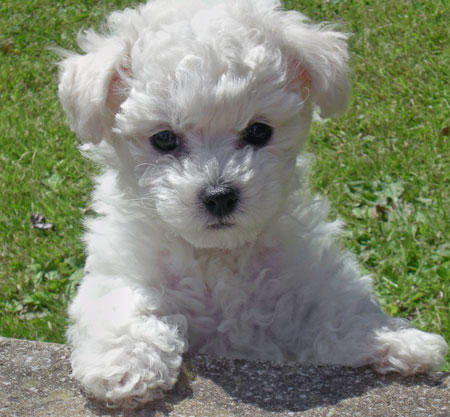
#2. "The Bichon Frise is a charming puffball of a dog with a loosely curled double coat consisting of a textured outer coat lined with a soft, fine, silky undercoat that is 3-4 inches (7-10 cm.) long and is virtually hypo-allergenic."
#3. "The coat is usually all white, but cream, gray or apricot hairs are permitted."
#4. "It has round, dark intelligent eyes and hanging ears that are well covered with hair."
#5. "The tail is curved over its back."
#6. "The Bichon is a most appealing white dog that loves human company."
#7. "It has an independent spirit, is intelligent, affectionate, bold and lively."
#8. "This charming, gentle dog is not a yapper."
#9. "It has a self-assured, happy temperament that is easy to live with."
#10. "These bright little dogs are easy to train and just plain old love everyone."
#11. "They need people to be happy."
#12. "They are naturally sociable and are happiest when they are part of the family that takes them everywhere."
#13. "This sociable trait means that they are fine in the company of other dogs and pets and are excellent with children."
#14. "Used as watchdogs and to perform tricks, this breed is competitive and obedient."
#15. "Like a lot of small breeds, the Bichon may be difficult to housebreak."
#16. "The Bichon Frise needs rules to follow, and limits to what they are and are not allowed to do."
#17. "If you begin to be your dog's pack leader, and are self-assured, calm, consistently and assertive towards the dog, providing daily pack walks, the Bichon will be a very stable minded, trustworthy dog."
#18. "Height: 9-12 inches (23-30 cm.)"
#19. "Weight: 7-12 pounds (3-5 kg.)"
#20. "Life Expectancy: About 15 or more years."
#21. "Litter Size: 1-6 puppies- Average 4-5."
#22. "The Bichon Frise can live in an apartment if it gets enough exercise. They are fairly active indoors and will do okay without a yard."

Info from: http://www.dogbreedinfo.com/bichonfrise.htm
Pic of Bichon puppy from: http://cdn-write.demandstudios.com/upload//1000/700/60/0/51760.jpg
Pic of adult Bichon from: http://www.mydogbreed.com/images/bichon-frise-health.jpg

Monday, September 7, 2009

Cockers!


Sorry I haven't been around for awhile. I visited my grandparents! Anyway, Cocker Spaniels are so cool so why don't you have a look at some facts about them:

#1. "The American Cocker Spaniel has very long hanging ears, a rounded head , and a profuse, silky, feathered, medium-length coat."
#2. "The nose is always black on black dogs, but may be brown on others."
#3. "The eyes are round, set on so they look straight forward. The eye rims are slightly oval. Merle Cocker Spaniels can have blue eyes."
#4. "The body is compact, with a short back. The front legs are straight, with good bone."
#5. "The coat comes in buff, black, and other solid colors, merle, black-and-tan (like a Rottweiler or Doberman Pinscher), parti-color (white with black, white with buff or red, white with black and tan points.) Some requirements for correct markings are specified in the standard."
#6. "The tail is docked to 2/5 it's original length and is carried on a line with its back; it is constantly in motion."
#7. "Field lines generally have shorter coats which are better to work in brush."
#8. "They also have good hunting instincts."
#9. "Both types make good types."
#10. "Bold and keen to work, the American Cocker Spaniel is equally suited to life as a gundog or as a household pet."
#11. "Cheerful, sweet, and sensitive."
#12. "The Cocker Spaniel is respectful of its handler's authority without much challenge."
#13. "Merry and endearing."
#14. "A happy tail-wagger."
#15. "Gentle and trusting, with average intelligence."
#16. "They are lively, playful and devoted, but should be socialized well when they are young so they can avoid a tendency for shyness."
#17. "Cockers who understand their place in under humans, are good with children."
#18. "They love everyone and need firm, loving leadership and daily exercise to be happy."
#19. "They can be difficult to housebreak."
#20. "They are mostly easy to train and get along well with other animals and dogs."
#21. "Height: 15 1/2 inches (38 cm.)"
#22. "Weight: 15-30 pounds (7-14 kg.)"
#23. "Living Conditions: Cockers will do okay in an apartment if they are adequately exercised, and are fairly active indoors. A small yard is sufficient."
#24. "Life Expectancy: About 12-15 years."
#25. "Litter Size: 1-7 puppies- Average of 5."

Info from: http://www.dogbreedinfo.com/americancocker.htm
Pic of Cocker puppy from: http://www.breederretriever.com/photopost/data/582/medium/iStock_000002174748Small.jpg
Pic of adult Cocker from: http://www.europuppyusa.com/images/dog_breed_info/6_1.jpg